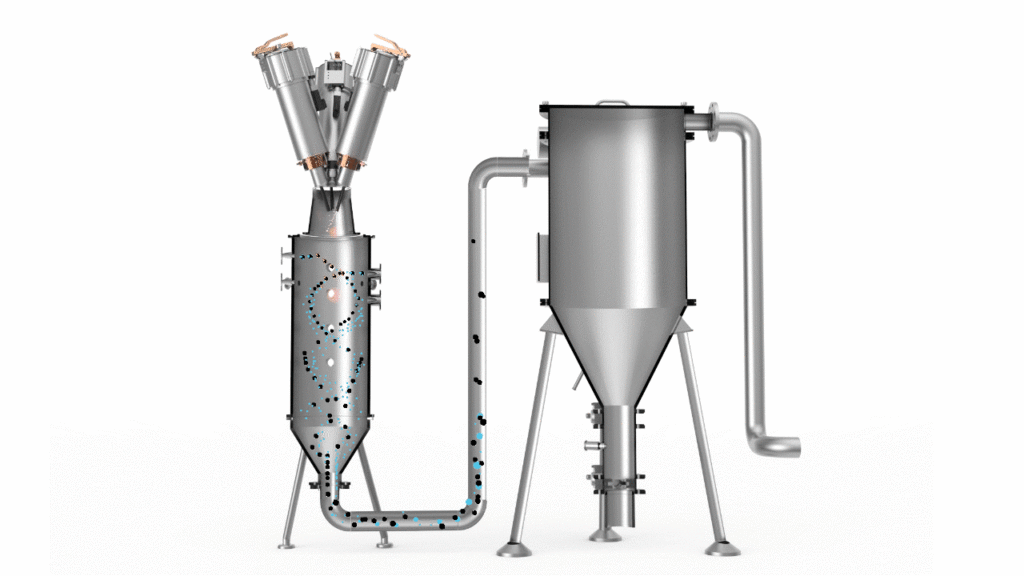
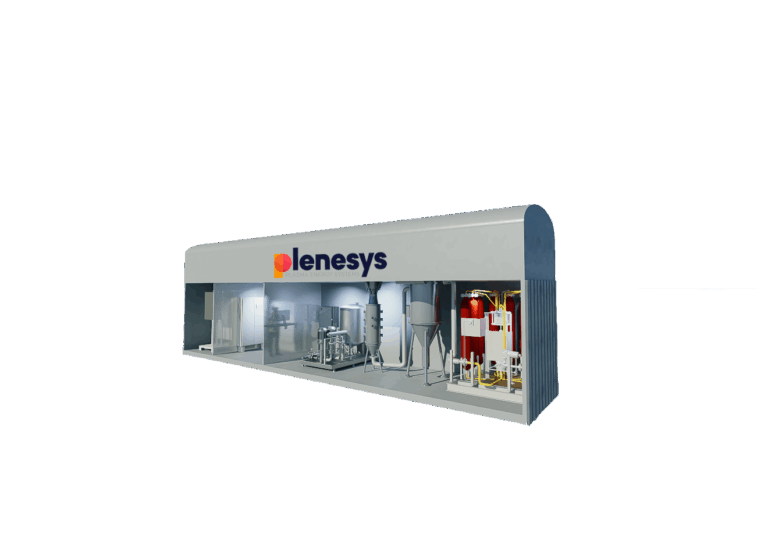
Hyplasma® is a plasma-based methane pyrolysis process that converts methane into hydrogen and solid carbon without direct CO2 emissions. Unlike steam methane reforming (SMR), the process does not involve combustion or oxidation, enabling low-carbon hydrogen production while recovering solid carbon as a valuable co-product.
0 kg
No direct CO2 emissions in the (bio)methane pyrolysis process.
< 3
Times less electricity consumption, compared with electrolysis. Methane pyrolysis requires significantly less electricity than water electrolysis to produce an equivalent amount of hydrogen.
CH4 -> 2 H2 + C
Technical features.
Discover the main features of HyPlasma®.
Combined valuable product.
HyPlasma® enables the simultaneous production of clean hydrogen and high-value solid carbon in a single process, without direct CO₂ emissions. Conventional routes typically rely on separate, energy-intensive processes for hydrogen production and carbon handling, increasing complexity and cost.
Competitive cost.
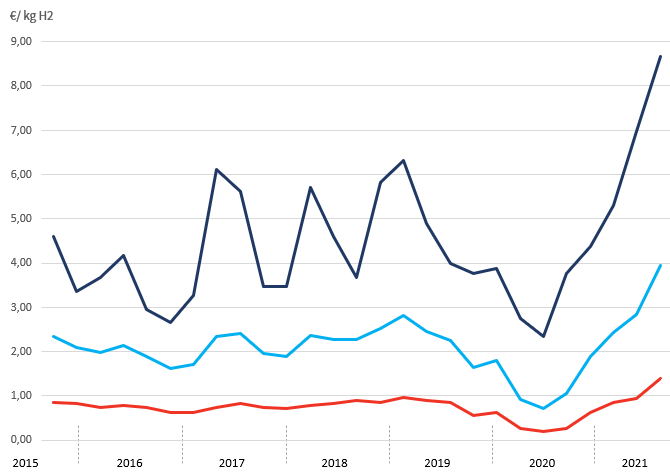
HyPlasma® offers low and stable production costs compared to conventional low-carbon hydrogen technologies. Unlike water electrolysis, which is highly sensitive to electricity prices, methane pyrolysis requires significantly less electrical energy per kilogram of hydrogen produced. In addition, the recovery and valorization of solid carbon as a co-product provides an additional revenue stream that can substantially reduce the net cost of hydrogen production. With limited maintenance requirements, economical consumables, and a simplified electrical architecture without an AC/DC rectifier, HyPlasma® represents a competitive alternative for traditional industrial hydrogen production.
Environmentally friendly.
HyPlasma® is based on a methane pyrolysis process without combustion, avoiding direct CO₂ emissions at the point of hydrogen production. By converting methane into hydrogen and recoverable solid carbon, the process provides a low-carbon alternative to conventional reforming routes. This approach aligns with industrial climate-neutrality objectives while enabling the valorization of carbon rather than releasing it as CO₂.
Low footprint.
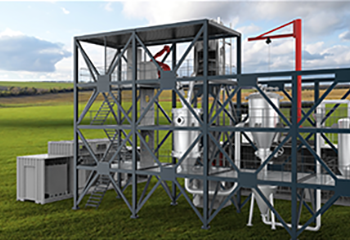
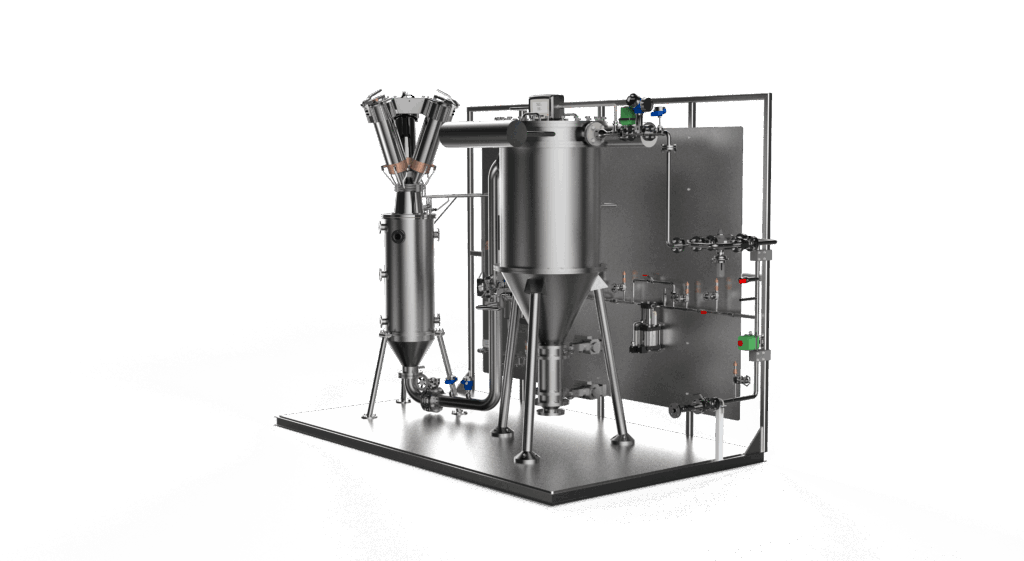
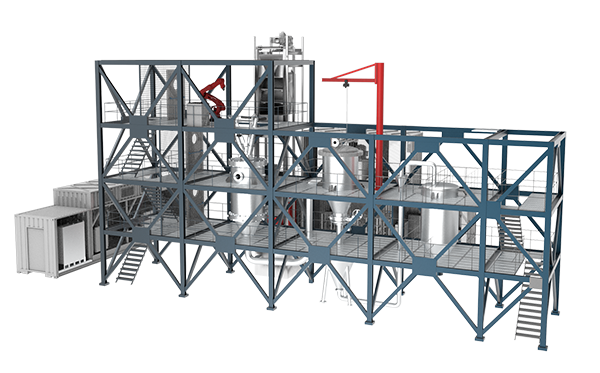
Thanks to its optimized and pressurized design, the HyPlasma® system has a limited physical footprint compared to conventional hydrogen technologies. Operating at pressures of up to 6 barg reduces internal gas volumes and downstream equipment size, enabling more compact plant layouts. This compactness facilitates integration into existing industrial sites where space constraints are critical.