
Applications in mining and metallurgy.
Decarbonizing steel production
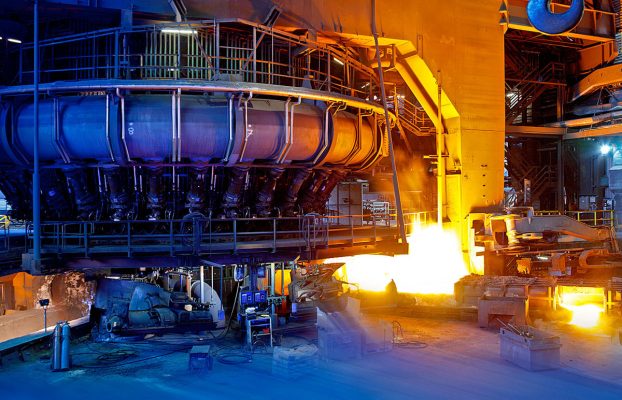
The steel industry accounts for ~7% of global greenhouse gas emissions and ~11% of global CO₂ emissions, largely due to the reliance on metallurgical coal in blast furnaces (BF-BOF), which still generate nearly 90% of the sector’s emissions.
Plasma electrification and clean hydrogen
Plenesys leverages two complementary technologies to support steel decarbonization :
First, AC plasma torch electrification can be integrated into blast furnace operations, including the EasyMelt* process developed with strategic partners (e.g., Paul Wurth). Powered by low-carbon electricity and compatible with coke oven gas (COG) reuse, this approach can reduce direct CO₂ emissions by up to 60%, while lowering CAPEX and OPEX, and remaining compatible with existing installations.
Second, HyPlasma® supports the Direct Reduction (DR) routes by supplying low-carbon hydrogen produced via methane pyrolysis. This provides a scalable alternative to fossil-based reducing agents and supports a progressive transition toward lower-emission steel production.
Toward competitive fossil-free steel
Modular, scalable, and deployment-ready, Plenesys’ solutions adapt to diverse industrial configurations. By replacing fossil fuels with plasma electrification and low-carbon hydrogen, they offer a practical and competitive pathway to cleaner steel production.
Decarbonizing Aluminum Industry
Current Practices in the Aluminum Industry
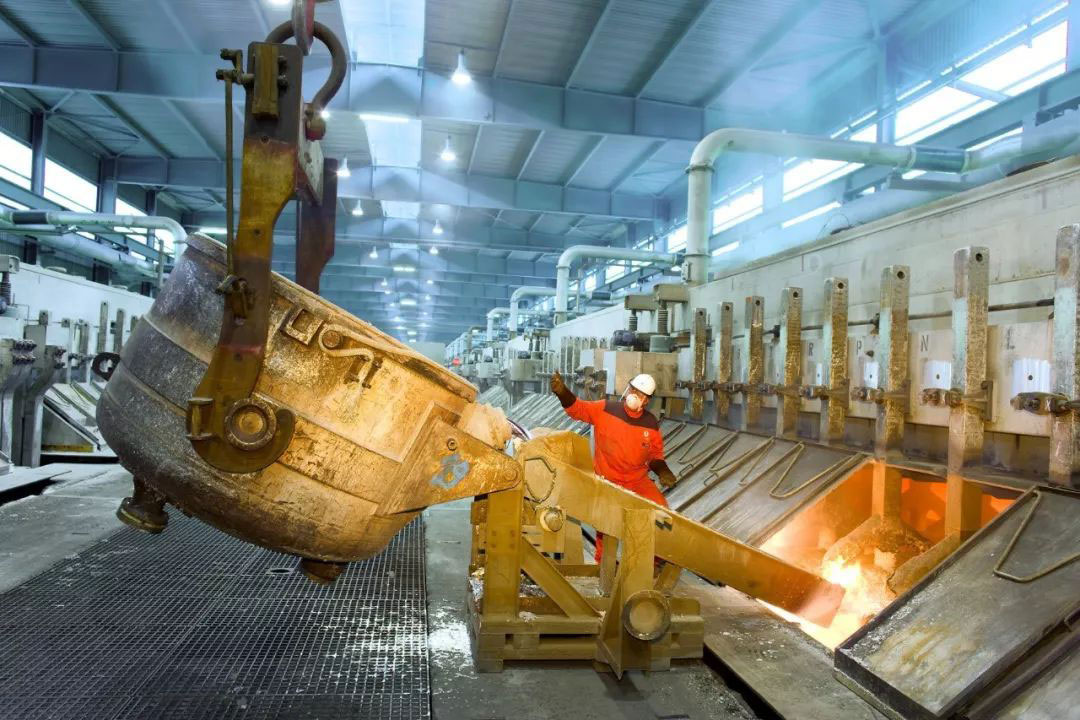
The aluminum industry relies heavily on fossil-fuel-based thermal energy—primarily natural gas and fuel oil—to provide high-temperature process heat across key production stages. In alumina refining (Bayer process), fossil fuels supply heat for digestion and for the calcination of aluminum hydroxide at 950–1100 °C.
In secondary aluminum production, fossil-fuel-fired furnaces are widely used for scrap drying, preheating, melting, and holding, with combustion flame temperatures exceeding 1500 °C. Additional fossil energy demand arises in foundry operations, including gas preheating for alloy production and other ancillary thermal processes.
Consistent with IEA and IPCC assessments, the use of fossil fuels for industrial high-temperature heat represents a major source of the aluminum sector’s direct (Scope 1) CO₂ emissions, underscoring the need for scalable low-carbon heat solutions.
Reducing CO₂ Emissions with Plenesys Plasma Technology
Plenesys’ plasma torch provides a high-temperature heat source powered by low-carbon electricity, operating without combustion. By delivering precisely controlled thermal energy, it eliminates direct CO₂ emissions at the point of use. When replacing fossil burners in alumina refining, aluminum recycling, and downstream thermal processes, plasma heating can significantly reduce the sector’s carbon footprint. It also removes fuel-related NOₓ and SOₓ emissions, improving air quality and reducing flue-gas treatment requirements. Fully compatible with existing furnaces and renewable power supply, the technology enables a scalable transition toward low-carbon aluminum production, achieving CO₂ reductions of 20–30% depending on plant configuration.
Depending on the plant configuration, CO₂ emissions can be reduced by 20–30%. * Meeting net-zero emissions using plasma technology | International Aluminium Journal
Decarbonizing Cement Industry
The Challenge of Clinker Production in the Cement Industry
Clinker production is the most CO₂-intensive stage of cement manufacturing. It involves heating a mixture of limestone and clay to around 1450 °C in a rotary kiln and accounts for more than 70% of a cement plant’s total CO₂ emissions. Roughly one-third of these emissions come from fossil fuel combustion—mainly coal and petroleum coke—while the remaining two-thirds are process emissions from limestone calcination, during which calcium carbonate (CaCO₃) decomposes into calcium oxide (CaO), releasing CO₂.
Plasma Torch Technology: A Pathway to Cement Decarbonization
Plenesys’ plasma torch technology offers a high-temperature, combustion-free alternative to conventional fossil fuel burners in clinker production. By delivering precisely controlled heat, it eliminates fuel-related CO₂ emissions while ensuring stable thermal profiles and maintaining kiln stability. Deployable within existing kiln configurations, plasma electrification provides a practical and scalable pathway to cement decarbonization. While calcination-related emissions remain, replacing fossil fuels with plasma heating can reduce total CO₂ emissions by approximately 30%, depending on configuration and integration strategy.
Reference: “Decarbonization of cement production by electrification”, ScienceDirect.
