

Carbon Black Production with HyPlasma®.
HyPlasma® technology, developed by Plenesys, introduces an alternative route for producing solid carbon materials. Through plasma pyrolysis of methane or enriched gas streams, the patented three‑phase plasma torch converts CH₄ into hydrogen and solid carbon without direct CO₂ emissions.
This process yields a family of clean, multi‑form carbon materials whose properties can be precisely adjusted to meet the requirements of different markets, from general‑purpose applications to high‑performance grades.
By combining process flexibility, consistency, and a combustion‑free approach, HyPlasma® offers a sustainable and competitive alternative to conventional carbon black production, and the next section explains how.
Thanks to advanced control of the plasma process, solid carbons from HyPlasma® technology have homogeneous, controlled physico-chemical properties
that meet industrial and scientific quality standards.
Key technical features.
Everything you need to know about carbon black production.
High purity.
Elemental analysis by EDS spectroscopy confirmed a near-exclusive carbon composition, with no detectable impurities or residual metals. This high level of purity results from a combustion-free process in a controlled environment, without oxidants or metal catalysts.
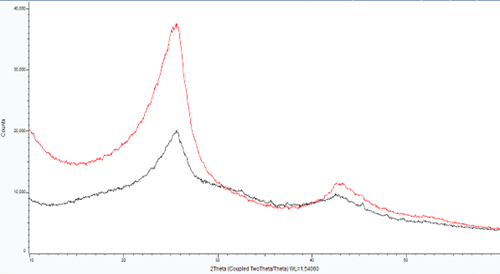
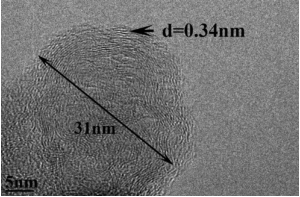
Typical amorphous structure of carbon black
Raman spectroscopy reveals an ID/IG ratio of of approximately 1.7, characteristic of low-crystallinity carbon blacks. This signature confirms that the material is closer to carbon black than to crystalline graphite, a key requirement for reinforcement and rubber applications.
Homogeneous spherical morphology.
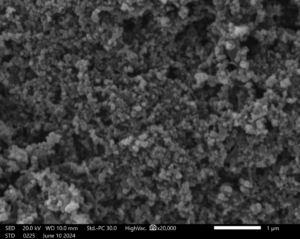
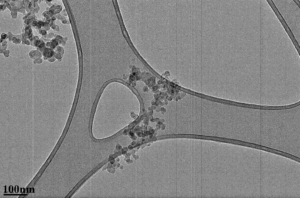
Electron microscopy (TEM and SEM) shows spherical primary particles with nanometric sizes ranging from 30 to 70 nm, forming fractal aggregates characteristic of carbon black. This homogeneous particle morphology facilitates dispersion in polymer matrices, improves mechanical properties, and enhances performance in coatings and elastomers.
Variable specific surface areas.
BET measurements indicate specific surface areas ranging from 69 to 126 m²/g, depending on the synthesis conditions. This controlled variability allows targeting different ASTM carbon black grades:
- High surface area (>100 m²/g): suitable for grades such as N110 or N220, use in demanding applications including tire treads, and high-strength materials,
- Moderate surface area (~70 m²/g): corresponding to grades such as N360 or N550, for general-purpose applications including liners, soles, and engineering plastics.

Process flexibility.
Process flexibility is a key feature of HyPlasma® technology. By adjusting operating parameters on the same experimental platform, a wide range of commercial carbon blacks and other carbon structures can be produced.
Results already obtained
Results obtained on the demonstrator unit confirm the ability to generate carbon black corresponding to several ASTM grades (from N1XX to N5XX), as well as amorphous carbon structures identified by X‑ray diffraction and high‑resolution TEM. Under specific plasma and humidity conditions, graphene oxide structures have also been observed, highlighting the versatility of the process.
A new generation of solid carbon materials
Beyond conventional carbon black, the HyPlasma® technology opens the way to a broader family of solid carbon materials produced in a clean and controlled manner. Plasma pyrolysis of methane generates multi‑form solid carbon whose structural and surface properties can be adjusted through process conditions.
These results demonstrate the capability of HyPlasma® to deliver a spectrum of advanced carbon materials from a single, combustion-free process.
